
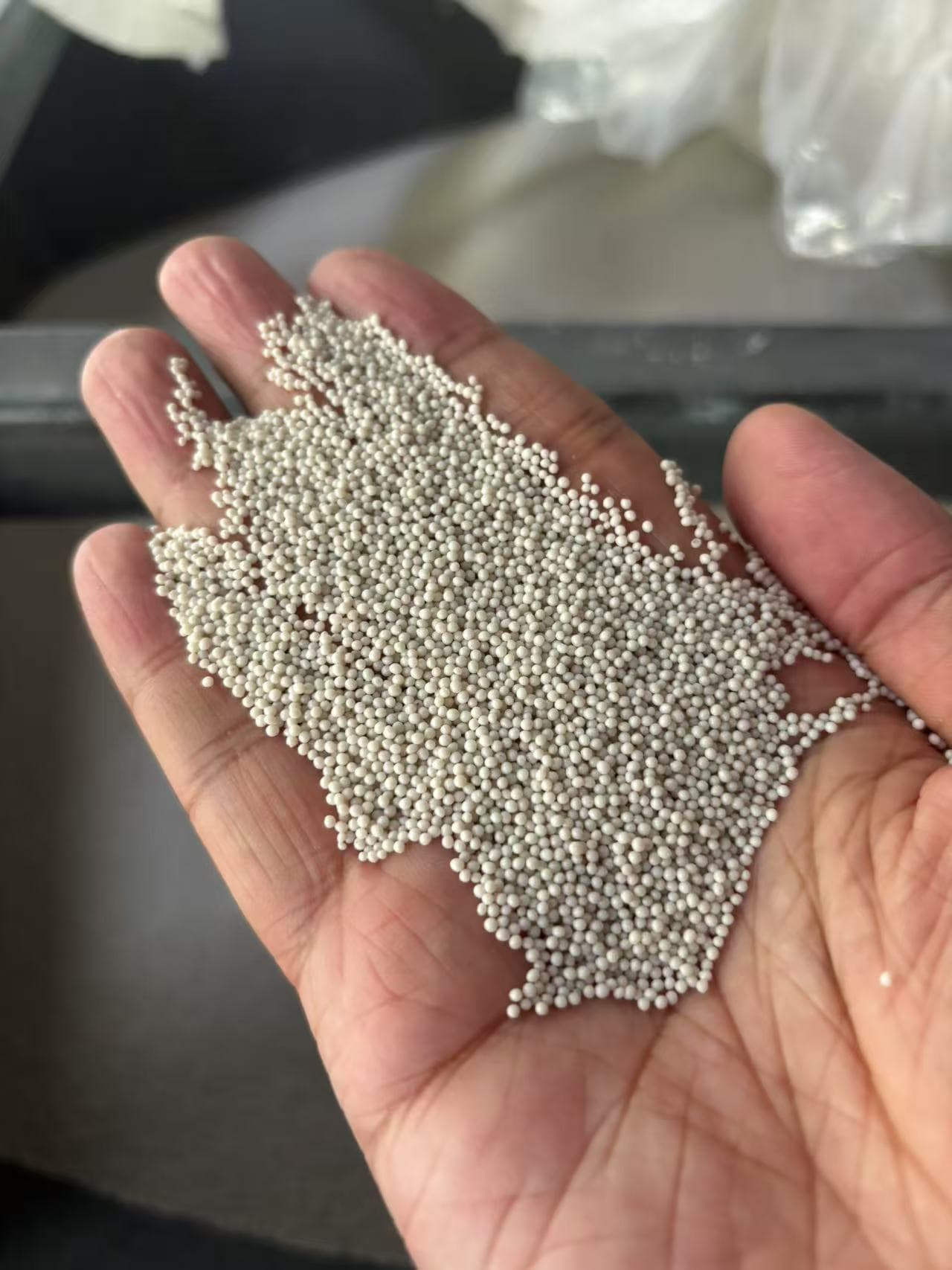
How to Select EPS Foam Beads for Protective Packaging and Appliance Components
Introduction
When a fragile product arrives damaged, the cost is not limited to the replacement part. It can include repacking, freight, production interruption, customer dissatisfaction and a difficult discussion about where protection failed. That is why an EPS foam bead purchase should begin with the protection requirement, moulded-part geometry and production route—not simply with an expansion number.
EPS foam beads are used to create lightweight moulded cushioning and component shapes. For packaging converters and appliance-component manufacturers, the useful questions are practical: Will the material fill the tool consistently? Can it achieve the required density and shape? Does the moulded part protect the product through the intended distribution route? Can the supplier repeat the result across shipments?
Cherein offers EPS foam beads, with a website reference for BEAD-300 / R-EPS 303 of 0.8–1.20 mm bead size and 18–45x expansion. These figures describe a reference grade range, not a ready-made answer for every mould. Mould design, pre-expansion, conditioning, steam settings, part thickness and customer requirements all influence the final result. Current batch documentation and a moulding trial should confirm suitability.
Define What the Foam Part Must Do
Protective packaging is an engineering task
The right insert must locate the product, absorb expected handling shocks, avoid excessive compression, support the product where needed and fit the outer carton. A very light part is not automatically better. If density is too low for the design, critical ribs or corners may collapse; if density is unnecessarily high, material use and cost can rise without improving the actual packaging performance.
Start by documenting:
- Product weight, dimensions and sensitive surfaces;
- Distribution route and expected handling severity;
- Outer carton type and pallet pattern;
- Required drop, vibration, compression or internal customer tests;
- Insert geometry, wall thickness, venting and target cycle time;
- Required colour, odour and appearance;
- Whether the part is packaging, an appliance internal component or another moulded-foam application.
The intended end use also affects compliance. Do not assume a material is approved for food contact, direct skin contact or a regulated product environment unless the appropriate application- and market-specific documentation has been reviewed.
Appliance components need fit as well as cushioning
EPS foam used in appliance-related applications may serve as transport protection, spacers, insulation-related elements or shaped internal components. Fit, dimensional repeatability and assembly behaviour can be as important as shock absorption. Provide a part drawing, mating surfaces and temperature/use conditions when you request a grade recommendation.
Understand the Three Data Points Buyers Ask About Most
Bead size and distribution
Bead size influences how material behaves during pre-expansion and mould filling, as well as the surface and detail that may be achievable in the finished part. A stated size range should be understood as a control point, not a stand-alone quality claim. Cherein lists 0.8–1.20 mm for its BEAD-300 reference. Confirm the current batch information and trial it in the intended tool.
Complex shapes, narrow sections and detailed surfaces may respond differently from large simple blocks. The moulding team should assess fill pattern, fusion, corner definition and surface condition before approving a grade.
Expansion range
Expansion describes how the beads can be expanded under a defined process; it does not guarantee the final density or cushioning performance of every part. The BEAD-300 reference range is 18–45x. Your actual operating result will depend on pre-expansion conditions, ageing/conditioning, steam, tool design, cycle timing and formulation.
Instead of asking only “What is the expansion ratio?”, ask: “What density range do we need in this geometry to pass our package test?” Then use a trial to establish the relationship between bead processing and moulded-part performance.
Consistency and contamination control
For moulded foam, inconsistent incoming material can appear as uneven fill, poor fusion, surface defects or varying part weight. Ask how the material is packaged, lot-labelled and protected before export. Inspect bags at receipt for damage, moisture exposure, obvious foreign material and label accuracy. Keep a retained sample linked to the moulding record.
Supplier control begins with the material route. Cherein describes a process covering recovered PS feedstock, cleaning and crushing, melting and extrusion, pelletising/processing, packaging and shipment checks. For a foam-bead enquiry, ask specifically how the proposed material’s bead properties and lots are controlled, rather than assuming every recycled PS product follows the same route or performs the same way.
Plan a Trial That Produces Useful Answers
1. Set acceptance criteria before the machine starts
Create a simple trial sheet. List target part weight, key dimensions, visible-defect limits, corner strength, assembly fit, density measurement method and required packaging performance test. Include the current reference material if you have one.
This makes the result usable for purchasing. Without defined acceptance criteria, one person may approve a sample because it looks clean while another rejects it after a drop test.
2. Control the pre-expansion and conditioning stage
Pre-expansion and bead conditioning are process-sensitive. Follow the current supplier guidance and your established plant method, then document the actual settings used. Avoid changing bead lot, pre-expansion, steam time and mould venting all at once. If a result changes, you need to know which variable caused it.
Check bulk density or another agreed proxy at the stage your process normally uses. Record time between pre-expansion and moulding, storage conditions and ambient factors that your plant tracks. These records support repeatability when the project moves from sample moulds to routine production.
3. Evaluate mould filling and fusion
After moulding, inspect hard-to-fill areas, corners, thin ribs, surface texture, parting lines and fusion between beads. Cut selected parts where appropriate to inspect internal structure. A part that looks acceptable externally may have weak fusion in a critical region.
When taking photos for supplier feedback, include the lot number, mould cavity, date, process condition and defect location. Vague photos make technical follow-up difficult; traceable evidence supports faster correction.
4. Test the assembled packaging system
An insert should be tested with the real product, carton and packing method where possible. Check product movement, contact marks, carton clearance and recovery after compression. Use the customer’s required distribution simulation or internal method. Material selection is only complete when the system performs as required, not merely when the foam part leaves the mould.
Match the Grade to the Application
Protective inserts for electronics and fragile goods
Focus on detail reproduction, corner protection, product retention, dust/particle management and appearance. Share the product’s vulnerable locations. A good insert holds the item in the intended orientation without concentrating force on screens, edges or decorative surfaces.
Packaging for appliances and larger goods
Focus on structural support, handling robustness, repeatable moulding of large geometry and fit with the carton/pallet system. Where the packaging is supplied across markets, confirm any customer-specific restrictions and labelling requirements early.
Moulded industrial components
Focus on shape retention, dimensional stability, assembly fit and the environmental conditions the part will see. If the component has insulation-related or construction-related use, obtain the final product’s required performance standards from the responsible manufacturer. Bead information alone does not establish compliance of the finished system.
Supplier Questions That Help Avoid a Poor Purchase
- What is the proposed grade and its current batch data?
- What bead-size range and expansion guidance apply to this lot?
- What packaging format, bag weight and lot marking will be used?
- Can you provide a representative sample for our moulding trial?
- What information do you need about our part, mould and target density?
- How will shipment inspection confirm labels, bag condition and loading accuracy?
- What is the process if the delivered lot does not match the agreed specification?
Answers should be clear, documented and proportional to the project. Be cautious of suppliers who guarantee end-product performance without asking about the mould, density, part geometry or test method.
Receiving and Shipment Inspection
Before loading
Confirm the purchase order, grade, lot identification, number of bags, net weight, packaging appearance and export marking. For container orders, loading photos can document pallet condition and basic shipment handover. This does not replace an independent inspection where one is required, but it creates a useful record.
At your facility
Check bags before moving them into storage. Record any torn bags, moisture exposure, mixed labels or quantity variance. Keep samples from the received lot and link them to production records. Store material according to the current product guidance and rotate stock so lot identity is maintained.
FAQ
What EPS bead size is best for protective packaging?
It depends on tool geometry, detail, target density, moulding process and packaging requirement. Cherein’s BEAD-300 reference size is 0.8–1.20 mm, but the correct choice should be confirmed by a representative moulding trial.
Does a higher expansion ratio always mean better cushioning?
No. Expansion is only one process indicator. Protective performance depends on final density, geometry, fusion, product fit, carton system and the required test method.
Can EPS foam beads be used for appliance components?
They may be considered for suitable packaging or moulded component applications after testing fit, density, surface condition and functional requirements. Share drawings and use conditions with the supplier.
What should I request with a sample order?
Request the current TDS/COA, bead-size and expansion guidance, lot identification, packaging details and handling information. Supply your target part, mould/process information and acceptance criteria in return.
Conclusion
The right EPS foam bead choice is made through an application brief and a controlled moulding trial. Bead size and expansion range provide a useful starting point, but the proof comes from final density, fusion, fit and package-system performance. When suppliers and converters share practical process data, the result is a more stable product and fewer surprises after shipment.
CTA: Send your foam-part requirements
Send Cherein your part drawing or photos, target density, bead-size preference, moulding process, destination market and expected order volume. We can review the information, share available EPS foam bead grade details and arrange a sample discussion for your validation programme.
---